Turn a Unix Timestamp Back Into a Date You Can Read
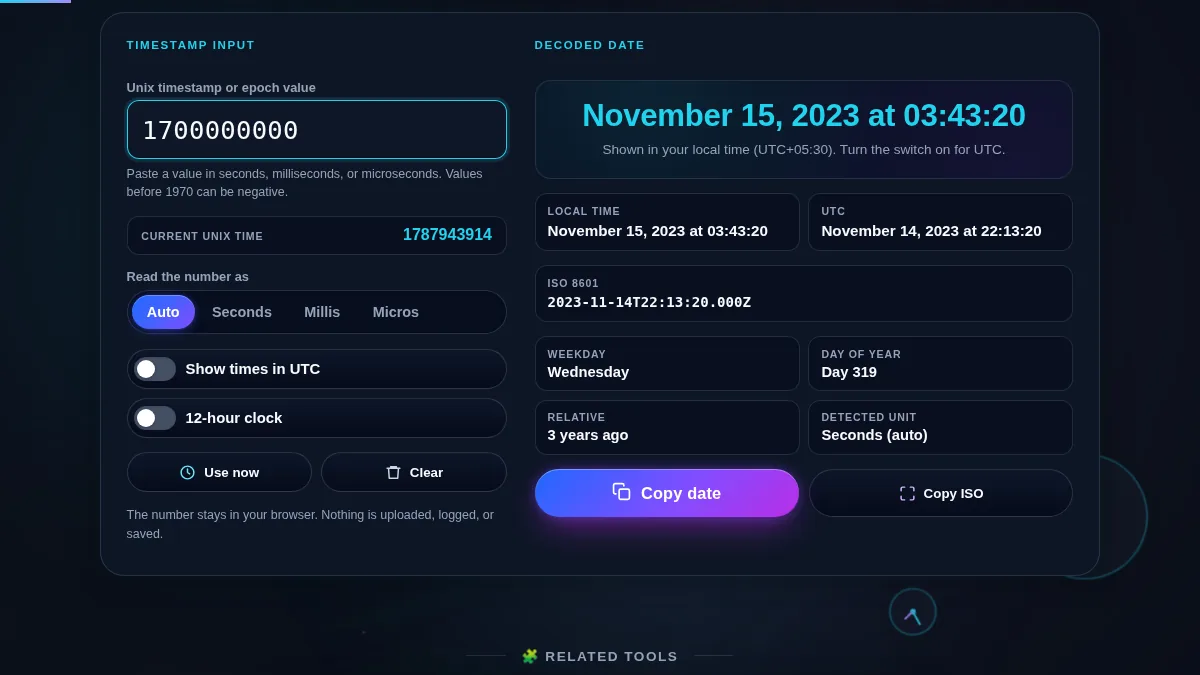
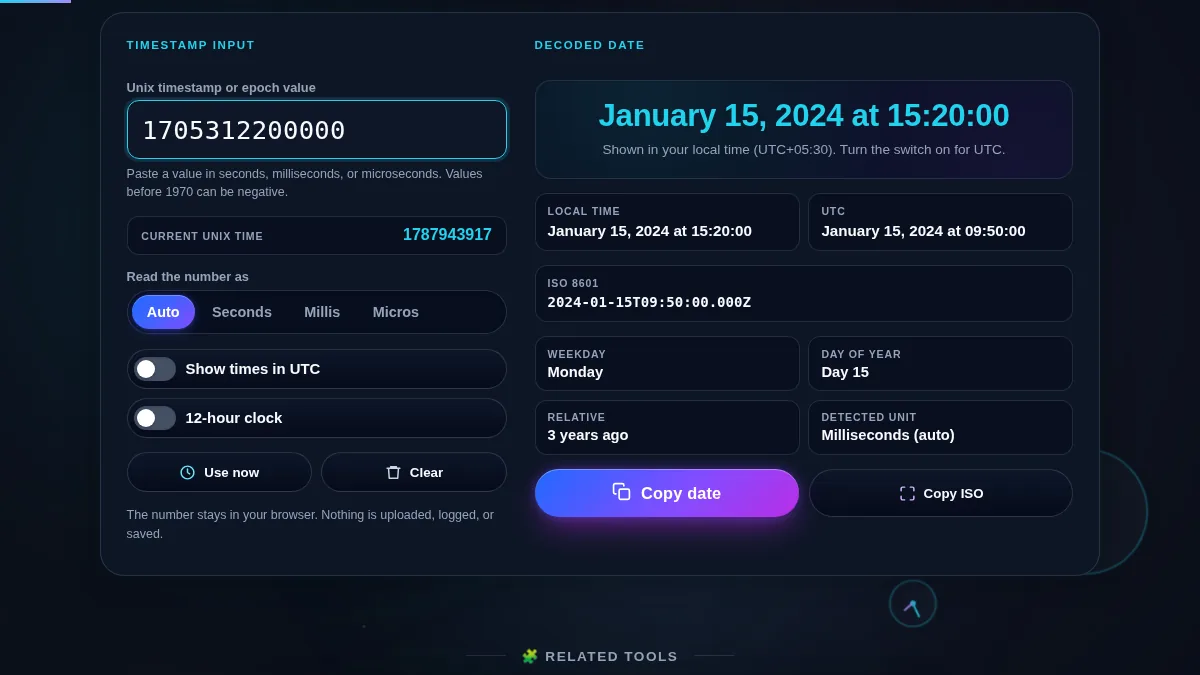
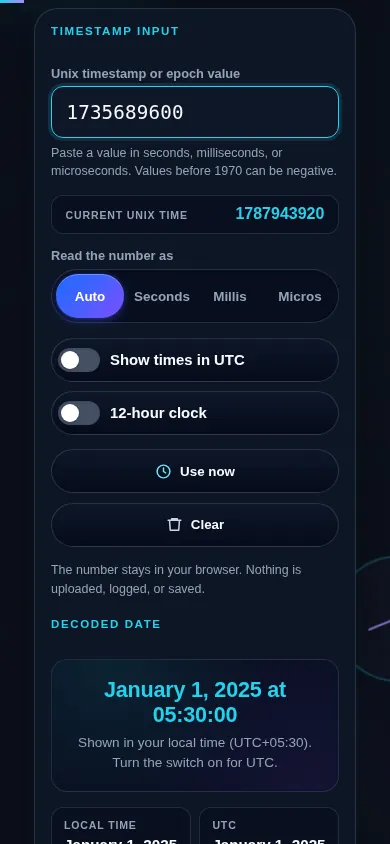
A Unix timestamp is a plain count of seconds since the start of 1970, which is convenient for computers and useless at a glance. This converter takes that number and gives you the date back in the forms people and code actually use: your local time, the same instant in UTC, the ISO 8601 string, the weekday, the day of the year, and a plain-language "3 hours ago" or "in 2 days".
It handles the three widths you meet in practice. Server logs and databases usually store seconds (10 digits today), JavaScript and many APIs use milliseconds (13 digits), and some tracing systems use microseconds (16 digits). Leave the unit on Auto and the tool picks the reading that lands near the present, or set it by hand when a number is genuinely ambiguous. To go the other way, from a calendar date to a number, use the Date to Timestamp Converter.
Every reading is computed in your browser. The number you paste is never sent anywhere, and each result has its own copy button so you can drop it straight into a bug report, a query, or a spreadsheet.