Randomly.online

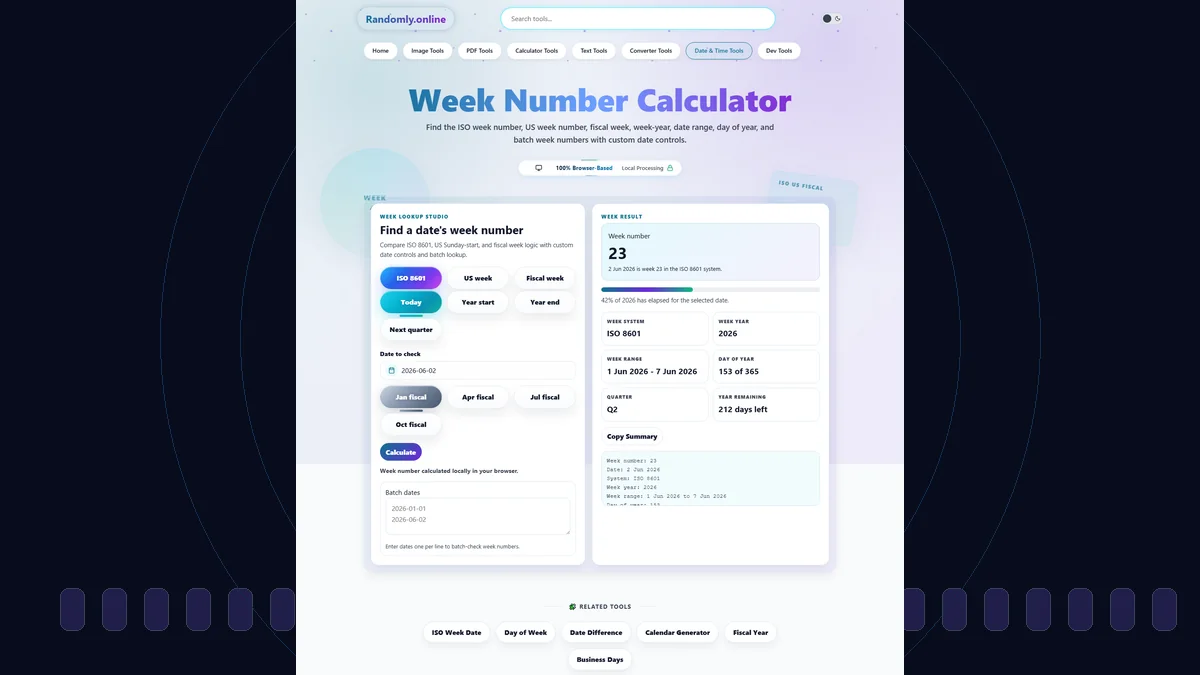
Week Number Calculator

Instant, private, and precise week calculation.

Week 1 Week -- Week 52
ISO 8601 WEEK
--
Calculating...
--
Total Weeks in Year
--%
Year Progress
--
US/Sunday Start
--
Day of Year

Batch Calculator

Enter multiple dates (YYYY-MM-DD), one per line:

Related Tools

Why Use a Week Number Calculator?

In the modern world of global logistics, corporate planning, and project management, tracking time by "Week Number" is as standard as using dates. However, confusion often arises because different regions use different systems. If you need to plan ahead, you might want to add days to a date to see which week a future deadline falls into.

The most common standard is ISO 8601, widely used in Europe and international business. For global teams, calculating the time difference between time zones is often paired with week-based scheduling to ensure sync. This Week Number Calculator eliminates the guesswork by providing instant, zero-latency results based on both ISO and US standards.

Whether you are organizing project milestones or generating reports, having a clear visual of your progression through the year is vital. If you find yourself needing to adjust visuals for your project reports, using a tool like an image resizer can help format your charts for presentation.

Mastering the Interface

We designed this tool to be intuitive and fast. Use the large day, month, and year wheels to quickly dial in your target date. For heavy administrative tasks, the work hours calculator can be used in tandem with this tool to track productivity across specific weeks.

  • The Scroller: Swipe with your thumb or scroll to select.
  • System Toggle: Switch between ISO 8601 and US standards.
  • Advanced Mode: Calculate multiple dates at once.

1. What is the difference between ISO and US week numbers?

The main difference is the start of the week and Week 1 definition. ISO weeks start on Monday, while US weeks start on Sunday. If you need to share these results in a document format, you can use a PDF to JPG converter to include your schedules in image-based slide decks.

2. Why does the year sometimes have 53 weeks?

A standard year has 365 days, which is 52 weeks plus 1 day. These extra days accumulate, leading to a 53-week year every 5 to 6 years. This is particularly important for those using a fiscal year calculator to align corporate earnings with calendar quarters.

3. Can I use this for business planning?

Absolutely. It is the perfect tool for calculating lead times and delivery windows that are typically expressed in week numbers (e.g., "Arriving Week 42").