One Timeline, Whichever Date You Have
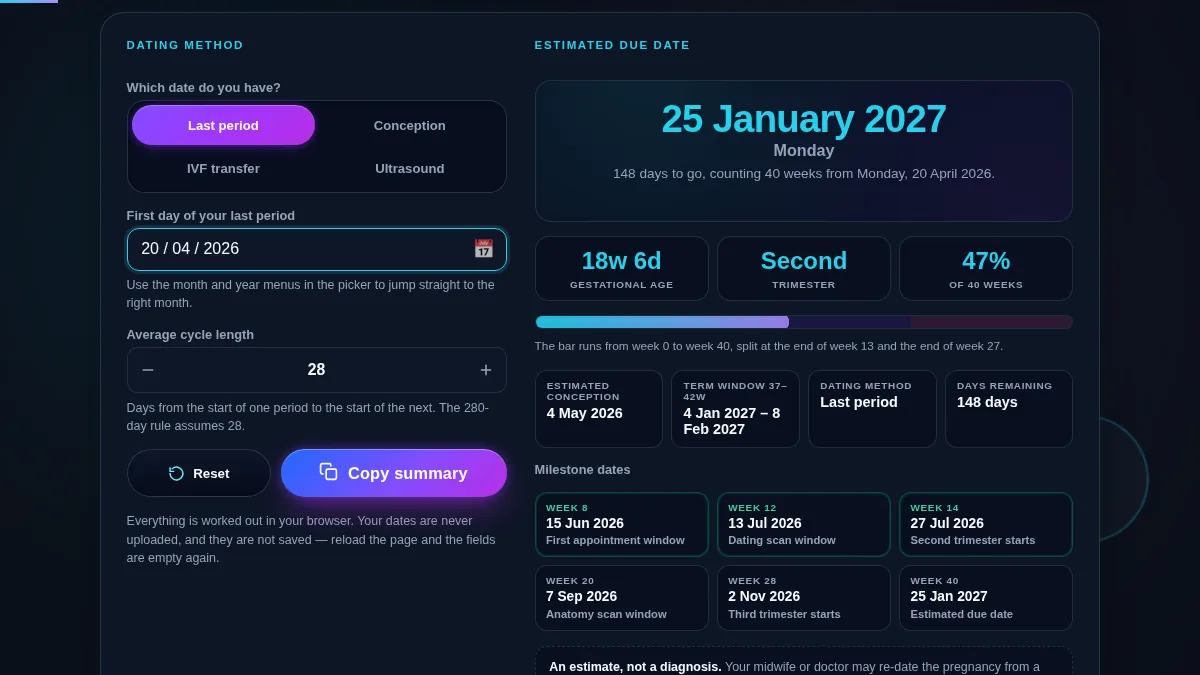
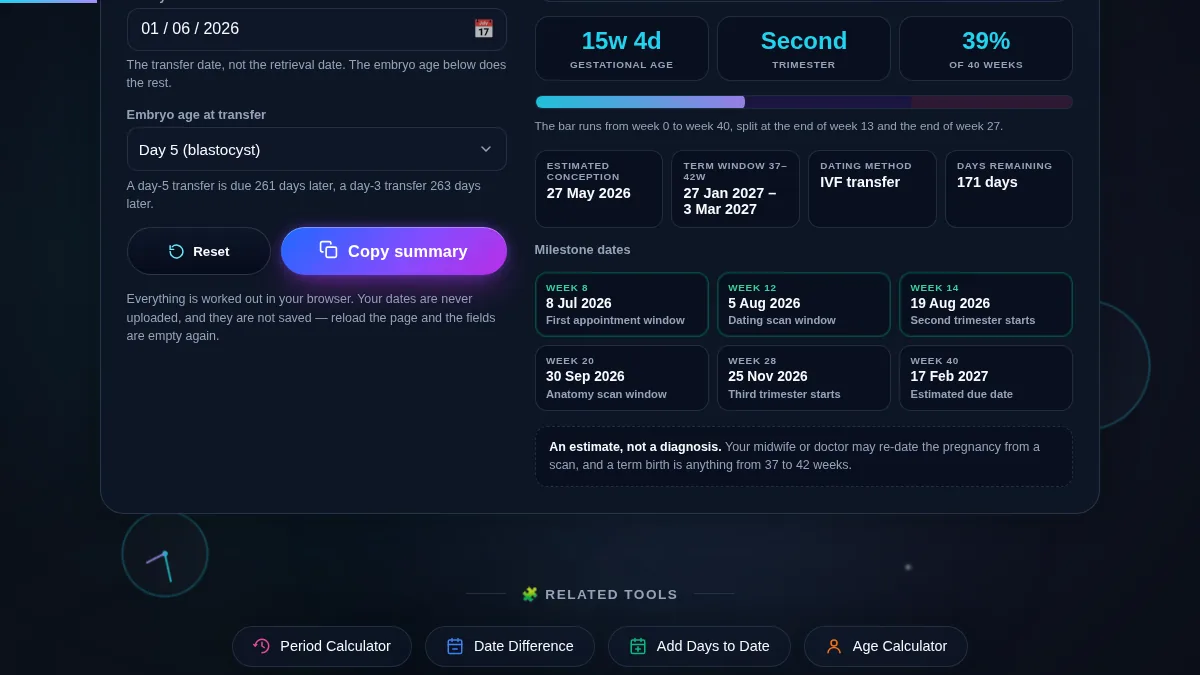
A due date is the same calculation every time — 280 days, or 40 weeks, from the first day of the last menstrual period — but not everyone arrives at it from the same place. Some people have a reliable period date. Some tracked ovulation. Some have an IVF transfer date, which dates a pregnancy far more tightly than a period ever could. Some have a scan that has already read a gestational age off a measurement.
This calculator takes any of those four and converts it back to the same starting point, so the answers are on one scale and can be compared with each other. The American College of Obstetricians and Gynecologists describes the estimated due date as 280 days from the first day of the last period, and the NHS notes that a scan usually gives a more accurate date than that count does — which is why the ultrasound method here rebuilds the whole timeline rather than nudging the existing one.
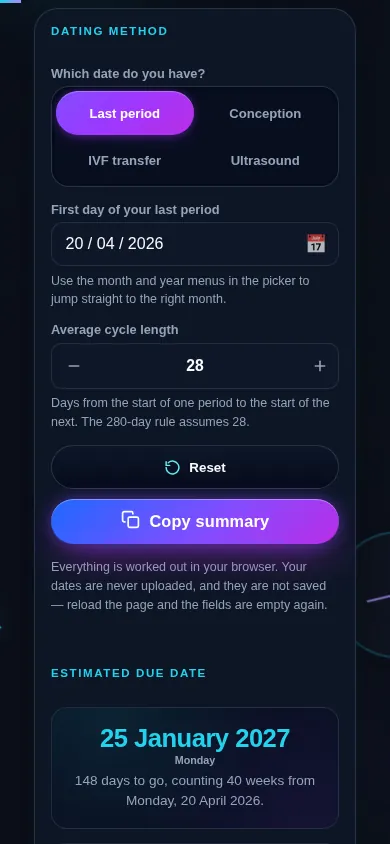
Beside the date you get the things people actually want next: how far along the pregnancy is today in weeks and days, which trimester that falls in, the 37 to 42 week window a term birth can land anywhere inside, the estimated conception date, and the dates of the appointments and scan windows that hang off the same timeline.